
Rome in two days: an itinerary that does not wear you out
Day one: ancient Rome (Colosseum, Forum, Palatine, then Monti and the Capitoline Hill). Day two: the Vatican in the morning, then Pantheon, Navona, Trevi and Trastevere. From late October the Colosseum park closes at 16:30 (4:30 pm), so plan the archaeology for the morning.
- Duration
- Two days
- Day 1
- Ancient Rome
- Day 2
- Historic centre and Vatican
- To book
- Colosseum and Vatican Museums
- Getting around
- BIT ticket, about 1.50 EUR (indicative), 100 minutes
In this article
- Day 1: ancient Rome
- Day 2: historic centre and Vatican
- How do you get around between stops?
- When should you go, and at what time?
- Tickets and bookings: what to buy and when
- What should you bring, and leave at the hotel?
- What should you skip with only two days?
- What if it rains?
- With children or reduced mobility
- The three rules that make the difference
- If you want to prepare plan B
- When the plan falls apart
You can see Rome in two days if you accept one rule: do not try to see everything. The city is made of layers, and the more you try to cover it, the more time you spend between stops. The secret is to group it by area and to decide in advance which two or three things need a ticket, a time slot or a queue.
- Day 1 · morningColosseum, Forum and Palatine
A single route: book ahead to avoid the queue.
- Day 1 · lunchMonti
A more genuine neighbourhood a few minutes from the Colosseum.
- Day 1 · afternoonCapitoline Hill and the centre
The view over the Forum, then on foot into the historic centre.
- Day 2 · morningVatican Museums and St Peter's
To be booked, and the longest part of the day.
- Day 2 · afternoonPantheon, Navona, Trevi
All close, a few minutes' walk apart.
- Day 2 · eveningTrastevere
A stroll with no plan.
Which day do you need?
Day 1: ancient Rome#
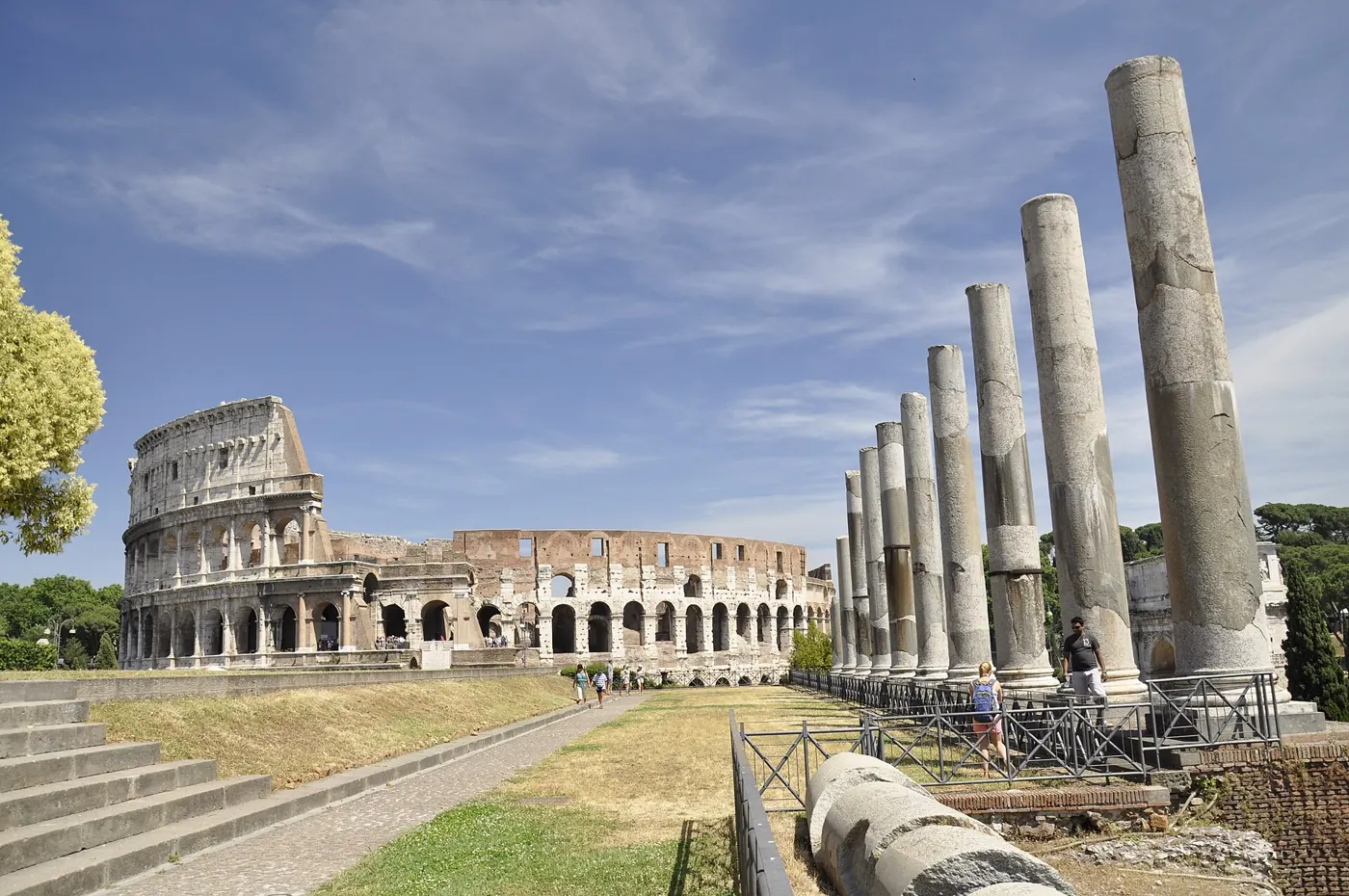
Morning: Colosseum, Forum and Palatine. They are close and covered by one ticket. On the park's official site the standard ticket is valid for 24 hours and gives one entry to the Colosseum (first and second tier, no arena) and one entry to the Roman Forum and Palatine. That means you can split the visit: the Colosseum when it opens, the Forum and Palatine after lunch, as long as you stay inside the 24 hours.
Hours matter. According to the park's page, from 25 October 2026 to 28 February 2027 the site is open 8:30 to 16:30, with last entry at 15:30; the Colosseum opens at 8:30, while the Forum and Palatine open at 9:00. In practice, in winter the archaeological afternoon is short: do the main block in the morning.
Lunch around Monti. A few minutes' walk from the Colosseum, it is a neighbourhood with less touristy places than the area immediately around the monuments. Skip the restaurants right at the foot of the Colosseum: walk two or three streets further, and compare the prices on the posted menu before sitting down.
Afternoon: Capitoline Hill and the centre. Climb the Capitoline Hill for the view over the Forum and continue on foot towards the historic centre. This is the elastic part of the day: if you are tired, stop there; if you still have energy, keep walking into the centre.
Day 2: historic centre and Vatican#
One decision matters here: the Vatican takes time and usually a booking. If you want to see it, put it in the morning and keep the rest of the day lighter.
Morning: Vatican Museums and St Peter's. The Museums and the Basilica are two separate sites with their own hours. For the Museums, the official page lists opening Monday to Saturday from 8:00 to 20:00, last entry at 18:00, and galleries cleared 30 minutes before closing. On Sundays they are closed, except the last Sunday of the month, when entry is free from 9:00 to 14:00 (last entry 12:30). For the Basilica, from 26 October 2026 to 28 March 2027 the listed hours are 7:00 to 19:00.
The Basilica has a dress code: trousers must be long or reach below the knee, skirts below the knee, and shoulders covered for everyone. There is no cloakroom, so bring only a small backpack. Everyone goes through a security check before entering.
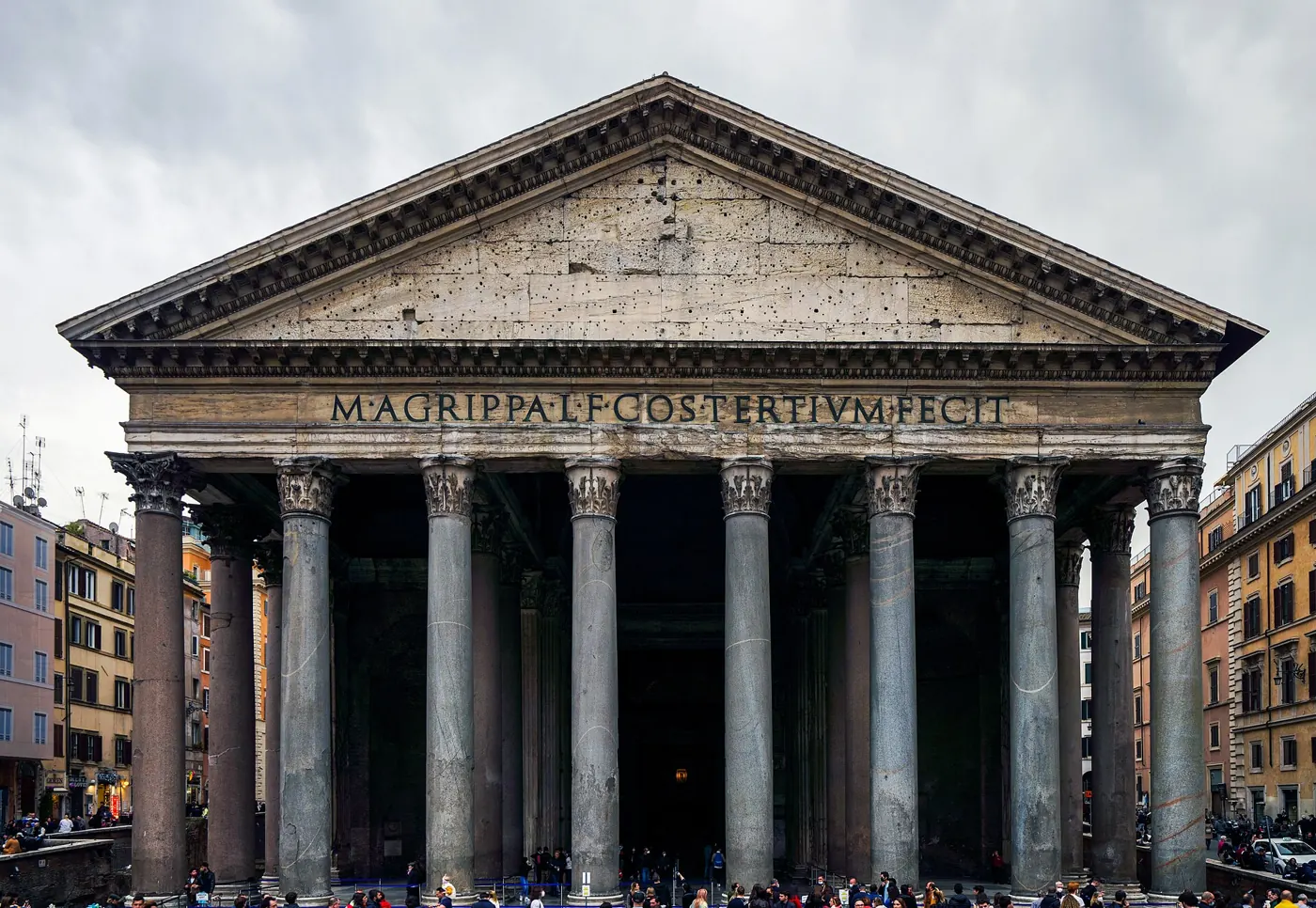
Afternoon: Pantheon, Piazza Navona and Trevi. They are close to one another and you can walk them in any order. The Pantheon is an active church: the official page lists Mass on Saturdays and the day before holidays at 17:00, and on Sundays and holidays at 10:30, and ticket sales stop one hour before liturgical activities. During services entry is free and limited to worshippers. Practical rule: if you can choose, do not schedule it for Saturday around 16:00-17:00 or Sunday morning.
Evening: Trastevere. A stroll with no plan is the right way to finish. You do not need a list of restaurants: cross the river, wander the narrower streets and choose where to eat by looking at who is eating.
How do you get around between stops?#
For short stretches, walk: in the historic centre it is how you see the most. For longer transfers (say, from the Colosseum to the Vatican) you will need public transport.
The basic ATAC ticket is the BIT: 1.50 EUR (indicative) and valid for 100 minutes from the first validation. It covers a single metro journey, including changes between lines as long as you do not exit the gates, plus unlimited rides on other public transport within the 100 minutes. Validate at the start of the journey and, if you change on the metro, validate again before the 100 minutes run out. Travelling without validating can lead to a fine listed at 100 to 500 euros (50 if paid within five days). For lines and stops, use the ATAC app or website: we do not list routes we have not checked.
When should you go, and at what time?#
The best moment depends on the place, not the city. For the Colosseum, opening time (8:30 in the winter period listed) is the sensible choice. For the Basilica, which opens at 7:00, the first hour of the day suits anyone who wants to walk in without rushing. For the Pantheon, avoid Mass times. For the Vatican Museums, remember that some days have closures or shorter hours: the official page lists, for example, a closure of the whole complex from 8:00 to 9:00 on 10 November and other closures during the year (1 and 6 January, 11 February, 19 March, 6 April, 1 May, 29 June, 14 and 15 August, 8, 25 and 26 December). The Colosseum park is closed on 25 December 2026 and 1 January 2027.
Tickets and bookings: what to buy and when#
Colosseum, Forum, Palatine. Tickets are named for every type: you must show the ticket and an ID at the entrances. The park rules say the name must match the ID and can be changed online only once, up to midnight on the seventh day before the visit; if the name does not match, you do not get in and there is no refund. There are also options with arena, underground or attic access, valid for two days: read the official page if they interest you. The hours page does not show prices, so check the purchase page.
Vatican Museums. The listed fares are 20 EUR for the full ticket without booking and 20 EUR plus 5 EUR for the skip-the-line ticket with booking (indicative, check them). The ticket is valid for the Museums and the Sistine Chapel only on the day it is issued, and is non-refundable. Children under 7 enter free.
Pantheon. Booking is optional and visits are in order of arrival, with no priority entry. The full ticket is listed at 7 EUR from July 2026 (5 EUR until 30 June), reduced to 2 EUR for ages 18 to 25, free under 18. It is also free on the first Sunday of the month and, according to the page, on 4 November 2026. One oddity: the Italian and English versions of the page give different limits on tickets per purchase (25 and 10), so if you are buying for a group, check.
What should you bring, and leave at the hotel?#
The Colosseum park rules provide no cloakroom or left-luggage and set maximum sizes for hand luggage, banning larger backpacks and trolleys, umbrellas wider than one metre, glass bottles, selfie sticks and other items. They ask for closed shoes suited to uneven ground. On water, the document gives no general rule: it only bans glass. In the open areas of the Forum and Palatine, small dogs under 10 kg are allowed only in a carrier. Leave suitcases and large bags at your hotel.
What should you skip with only two days?#
Say no to three things. First: any extra museum beyond the two you booked, because it eats your free half day. Second: restaurants a step away from the monuments, where you pay for the location. Third: coming back to the same area twice just for a better photo. And a few things that are lovely but not essential: climbing to every viewpoint, entering every open church, walking the whole perimeter of the Forum when you are already tired.
Want a route like this, ready-made and adapting to the weather?
Be among the firstWhat if it rains?#
The plan is already built in. The Vatican Museums are indoors, and so are the Pantheon and the Basilica: move them to the rainy day. If it rains on day one, keep the Colosseum slot you booked and move Monti and the Capitoline Hill to day two. Remember that the park bans umbrellas wider than one metre: a compact umbrella is fine, a light rain jacket even better.
With children or reduced mobility#
We stick to what we read on official sites. The Vatican Museums are free under 7; the Pantheon under 18. For the Museums, free entry for people with a certified disability of at least 67% plus a companion cannot be booked online and requires documentation. For the Pantheon the page mentions a ramp for disabled access, with no further detail. On accessibility at the Colosseum, Forum and Palatine we found no verified information: ask the park directly before you leave.
The three rules that make the difference#
- Group by area. No zig-zagging.
- Book the most requested places, leave the rest free.
- Leave one empty hour each day. Rome gets better when you are not in a hurry.
If you want to prepare plan B#
The same logic applies in every city: read how to use artificial intelligence for itineraries and what to do in Catania when it rains. If you continue to Sicily, one day in Ortigia is a good example of a compact itinerary, and what to eat in Catania keeps you out of the first restaurant you pass.
When the plan falls apart#
Rain, tiredness, a queue that never ends: it always happens. A good itinerary has a plan B ready. UNNIVAI is built for this: building the route with real places and rewriting it when the day changes. Be among the first.
Verification note: hours, prices and access rules were read on the official sites of the Colosseum Archaeological Park, the Vatican Museums, St Peter's Basilica, the Ministry of Culture (Pantheon) and ATAC on 29 October 2026. They change by season and for events: always check the official information before you travel. Not verified: Colosseum ticket prices, transport lines and stops, accessibility at the Colosseum and Forum, Basilica entry fees.
Frequently asked questions
Are two days enough for Rome?
Two days are enough for the great classics if you group them by area. They will not be enough for everything, and that is fine.
Should you book in advance?
For the Colosseum, tickets are named and must be shown with an ID; for the Vatican Museums there is a surcharge for skip-the-line booking; for the Pantheon booking is optional. Always check the official websites.
What is the most common mistake?
Jumping from one side of the city to the other. Grouping stops by area saves hours of walking.
Can I bring a backpack or suitcase to the Colosseum?
The park rules set maximum sizes for hand luggage and state that there is no cloakroom or left-luggage. Leave big bags at your hotel.
Is the Pantheon free?
Not usually. The Ministry of Culture page lists an indicative full price of 7 EUR, free entry under 18 and on the first Sunday of the month. Check the page before you go.
How do I get from one stop to the next?
On foot where stops are close, and with the ATAC BIT ticket for longer hops: 1.50 EUR, valid 100 minutes from the first validation.
Official sources
Be among the first.
Tell me where you want to go: I will write when UNNIVAI reaches your city. No newsletter before that.